



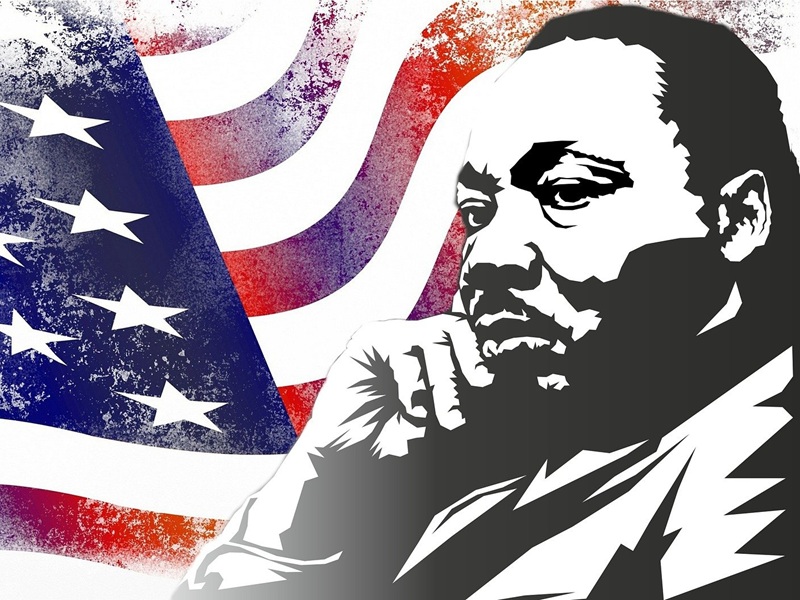
Martin Luther King Jr.’s Where Do We Go from Here: Chaos or Community? reads in 2026 less like a period piece from the late 1960s and more like a sharp, unfinished memo to the present. Written in 1967, in the wake of landmark civil rights victories, King warned that legal gains without structural transformation would leave the United States perched between two futures: a fractured society sliding into chaos, or a “beloved community” built on justice, shared sacrifice, and economic security for all.
King’s last blueprint
King’s final book is not a victory lap; it is an autopsy and a blueprint. He surveys a decade of civil rights struggle and concludes that dismantling Jim Crow laws is only the beginning, not the end, of the work. The question he presses is not simply “What have we achieved?” but “What do we do with the new power that voting rights and desegregation have given?”
He argues that African Americans and allies must move from protest to comprehensive reform, especially in the realm of economics. King calls for jobs at living wages, guaranteed income for those unable to find work, and access to land and capital—measures he sees as necessary to redistribute opportunity, not merely rhetoric about equal chances. Throughout, he insists that he is neither a Marxist nor a doctrinaire socialist, but a Christian democrat arguing that human dignity demands more than token inclusion in an unequal order.
Chaos, community, and a fragile democracy
The book’s title frames a stark choice: chaos or community. King describes “chaos” as a convergence of entrenched racism, crushing poverty, militarism, and political cowardice—a society that has the technology to uplift humanity but chooses instead to squander resources on war and repression. In 1967 he pointed to the Vietnam War as a tragic diversion of lives and dollars away from urgent domestic needs.
That language lands with fresh force in 2026. The United States has just weathered years of escalating political polarization, violent threats against election workers, and a series of Supreme Court decisions and executive actions that many legal scholars say have weakened traditional checks and civil rights protections. Reports on initiatives like “Project 2025” warn that consolidating presidential power and gutting civil rights enforcement could undercut voting rights, antidiscrimination protections, and basic safeguards Black communities have relied on for decades. In such a landscape, King’s reminder that democracy survives only when a people choose “community, not chaos” sounds less like moral poetry and more like a civic alarm.
Poverty, technology, and the unfinished Poor People’s Campaign
One of the most striking features of King’s later thought is how unapologetically economic it is. He insists that racism, poverty, and militarism are “interlocking evils” that must be confronted together. The Poor People’s Campaign he was organizing at the end of his life sought not symbolic gestures but structural guarantees: full employment or decent income, fair housing, and genuine participation of ordinary people in shaping policy.
In the twenty-first century, the tools King could only imagine—artificial intelligence, global networks, unprecedented productivity—have become reality. Yet vast racial wealth gaps, housing insecurity, and unequal access to healthcare and education remain stubborn features of American life. Contemporary advocates, including the revived Poor People’s Campaign led by figures like Rev. William Barber II, explicitly draw on King’s framework, arguing that climate crisis, low-wage work, and voter suppression are today’s expressions of the same interlocking evils. King’s challenge to “deploy the enormous technological advances” for global collaboration and basic human needs remains largely unanswered.
Nonviolence versus the politics of resentment
In Where Do We Go from Here, King also confronts growing disillusionment within the movement. He critiques the emerging currents of Black Power that flirted with separatism and militancy, not because he denied Black anger, but because he believed that violence and racial exclusivism would prove “immoral and self-defeating.” His counter-vision is a militant nonviolence rooted in love, disciplined enough to resist both despair and revenge.
The relevance to 2026 is uncomfortable. Across the spectrum, public discourse increasingly trades in humiliation and fear, rewarding leaders who promise to punish enemies rather than repair communities. Federal courts’ shadow-docket decisions and executive maneuvers on issues like immigration enforcement and protest policing have heightened the sense that some lives are expendable, especially immigrants and communities of color. King’s insistence that “justice at its best is love correcting everything that stands against love” cuts against the grain of a culture that often mistakes cruelty for strength.
Answering King’s question in 2026
To revisit Where Do We Go from Here in 2026 is to be reminded that King left the country not a dream to admire but a question to answer. The question is not whether progress has been made; it is whether this generation is willing to carry forward the costly work of transforming structures, not just sentiments. King asks Americans to choose: nonviolent coexistence or “violent coannihilation,” a beloved community or a managed chaos that may no longer be manageable.
Across the country, commemorations of King in recent years have increasingly turned to this text as a framing theme, signaling a desire to grapple with its harder demands—on voting rights, economic justice, workers’ dignity, and shared sacrifice. The fact that King’s 1967 warnings fit so seamlessly over the headlines of 2026 is sobering. Yet his vision still assumes that another way is possible. The haunting power of Where Do We Go from Here is that it refuses to let the nation off the hook. The choice between chaos and community, King insists, has not expired. It is renewed—urgently, relentlessly—with every policy written, every budget passed, and every neighbor either feared or embraced.