



The storm they are growing up in
Young Black men are coming of age in a context shaped by overlapping pressures: stubborn educational gaps, volatile labor markets, and persistent exposure to racism in schools, on the streets, and online. Even as more Black men earn college degrees, data show they still trail peers in graduation rates, earnings, and employment—and they are more likely to be pushed out of K–12 classrooms before they ever reach a campus.
These challenges are not just about individual effort but about systems that track boys into special education, suspend them at higher rates, and rarely give them teachers or leaders who look like them. In this environment, a wise, steady adult who says “I see you, and I’m not going anywhere” is not a luxury; it is a lifeline.
What mentoring actually changes
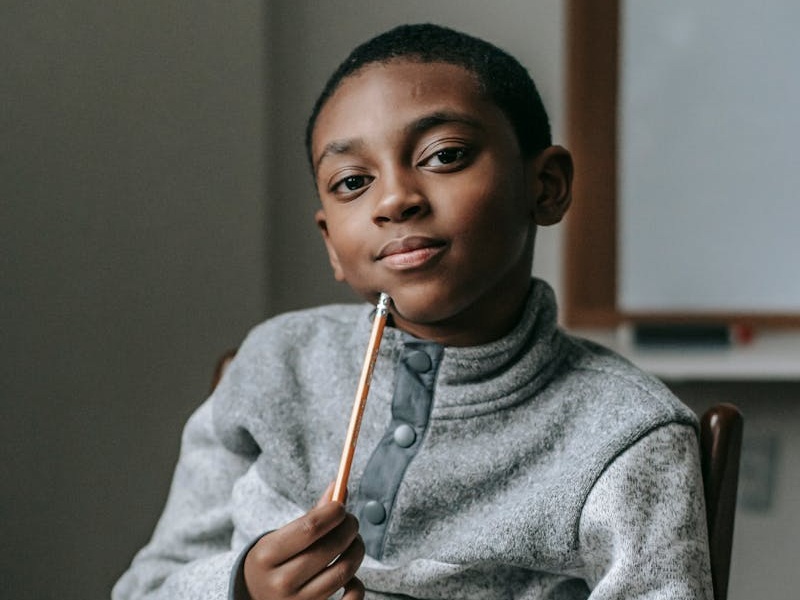
Decades of studies point in the same direction: consistent mentoring improves outcomes for Black boys in school, work, and mental health. In one Philadelphia study, Black boys ages 12–20 who had a natural mentor were 2.8 times more likely to report getting good grades than those without a mentor—a nearly threefold increase in the odds of academic success. That is not a small nudge; it is the difference between barely hanging on and beginning to believe, “School might actually be for me.”
The contrasts are stark when life gets hard. For Black boys without a mentor, racial discrimination was strongly tied to higher suspension rates and lower school engagement, meaning every slight and slur pushed them further to the margins. For boys with a natural mentor, those same discriminatory experiences were less likely to translate into suspensions and disengagement; they showed fewer behavior problems and stronger connection to school, because someone helped them process their anger without self-destruction.
The impact stretches into adulthood. A systematic review found that Black male adolescents with an informal adult mentor had average earnings 88 percent higher in adulthood than similar peers who were not mentored. For fatherless Black youth, the effect was even more dramatic: those with a male mentor earned 214 percent more in adulthood than fatherless peers without a mentor, a reminder that one faithful relationship can echo through an entire working life. Mentored Black youth are also more likely to report good or excellent mental health, stronger racial identity, and lower involvement in risky or delinquent behavior than their non-mentored peers.
Schools feel these differences, too. In Afrocentric and school-based mentoring programs, Black boys with mentors have shown better attendance, higher GPAs, improved standardized test scores, and reduced dropout risk. In one district, access to an achievement and mentoring program for Black male high school students was associated with about a 43 percent reduction in annual dropouts, and graduation rates for Black young men rose from 46 percent to 69 percent over eight years, outpacing districtwide gains. Behind those percentages are fewer empty desks, fewer court dates, more caps and gowns.
Why Black men as mentors matter
Any caring adult can make a difference, but there is unique power when Black men step into mentoring roles. Young Black men live in a media environment that regularly portrays them as threats, jokes, or statistics; seeing a Black man who navigates work, faith, and family with integrity gives them a living counter-narrative. Studies of Black-led and Afrocentric programs show that when Black boys are paired with mentors and educators who share their background, expulsion rates fall, university attendance rises, and students report stronger identity, pride, and belonging in school.
Representation, in this context, is not cosmetic; it is formative. Many Black boys move through their entire schooling without ever having a Black male teacher, and surveys suggest they are less likely than Black girls to report having informal adult mentors. That scarcity magnifies the impact of each Black man who chooses to show up in a boy’s life—as a coach, deacon, uncle, neighbor, or volunteer—because he becomes one of the few living examples of what Black manhood can look like beyond stereotypes.
There is also a multiplying effect. Research on Black youth mentoring indicates that those who were mentored growing up are significantly more likely to become mentors themselves. A large majority of mentored Black youth say they want to mentor in the future, and many are already doing so, informally or through programs. Today’s mentee sitting in the back row may be tomorrow’s man at the front of the room, hand on a younger brother’s shoulder, saying, “I’ve been where you are. Let’s walk this out together.”
The long arc: from dropout to destiny
Mentoring changes more than a season; it changes a trajectory. When suspension turns into graduation, and isolation turns into belonging, entire neighborhoods feel the difference. Nationally, mentored Black youth are more likely as young adults to stay in school, secure employment, and report positive mental health than peers without mentors, which translates into more stable families, safer communities, and stronger churches and civic groups.
Mentoring will not, by itself, dismantle structural racism or close every gap. But in a high-stakes moment for democracy, education, and community safety, choosing to walk with one young Black man is a concrete way to resist despair and insist that his future is too sacred to leave to chance. Each mentoring relationship becomes a small defiance of the narrative that Black boys are expendable, and a quiet, daily vote for their hope, their gifts, and their God-given possibility.